The flight simulator for industrial plants.
120 real situations. Real physics. Real consequences.
Every situation in the library is grounded in a real incident, matched to your facility, and run live so the consequence emerges from physics instead of being scripted.
The Piper Alpha pattern
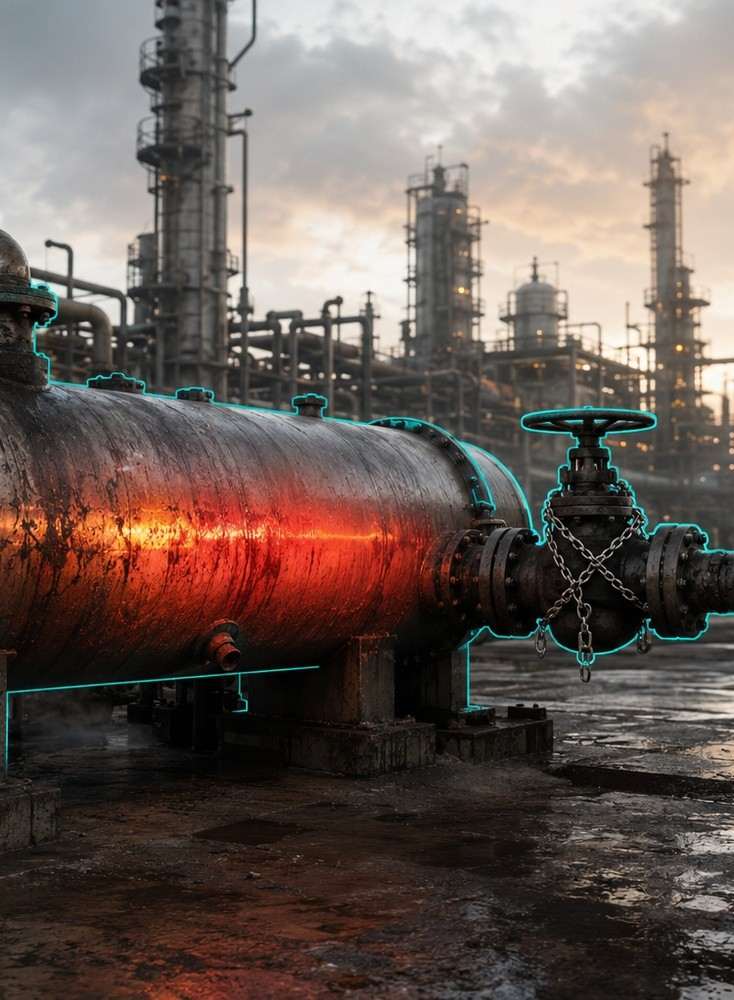
Then the heat came on
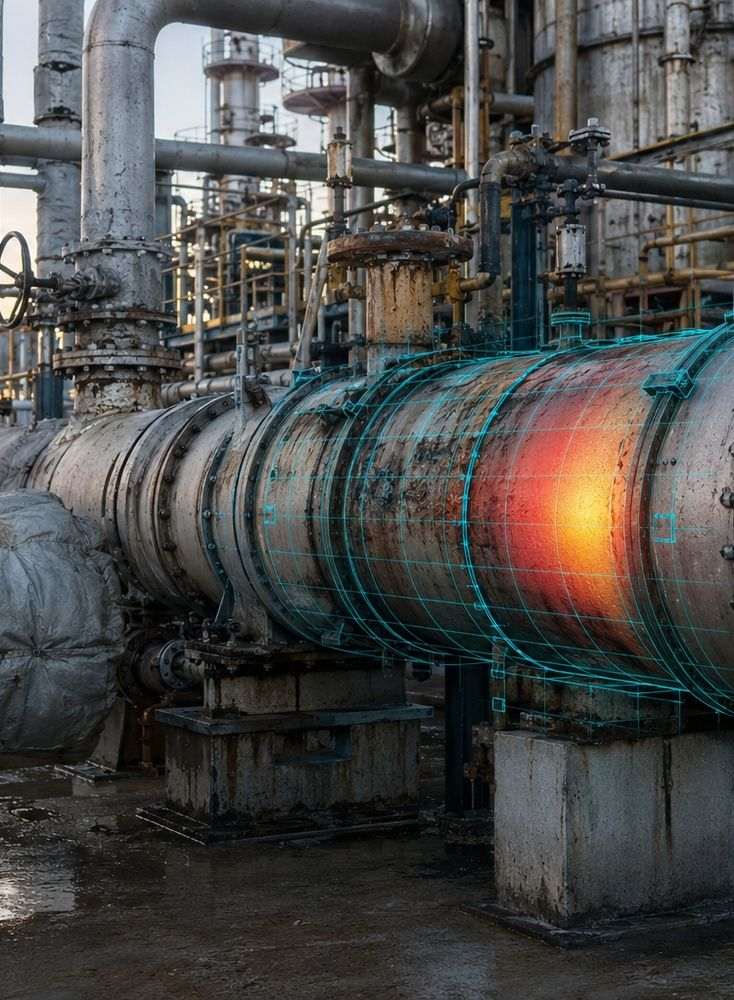
The level that lied
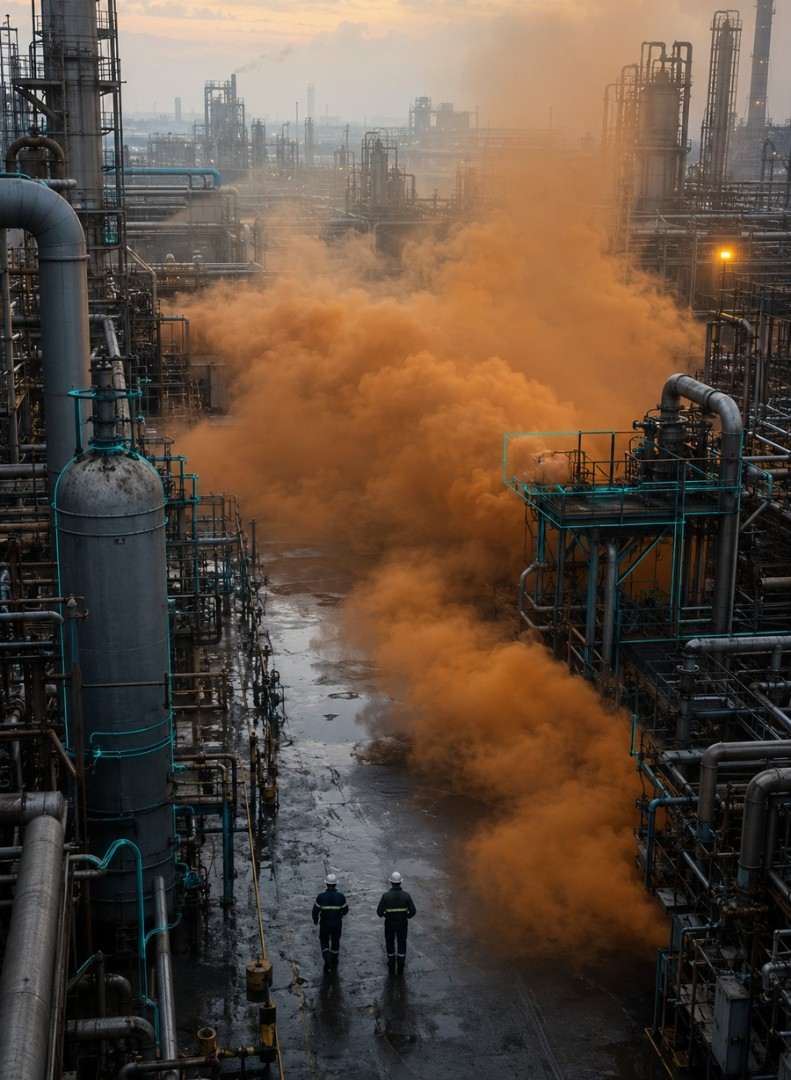
22 minutes of drifting vapour
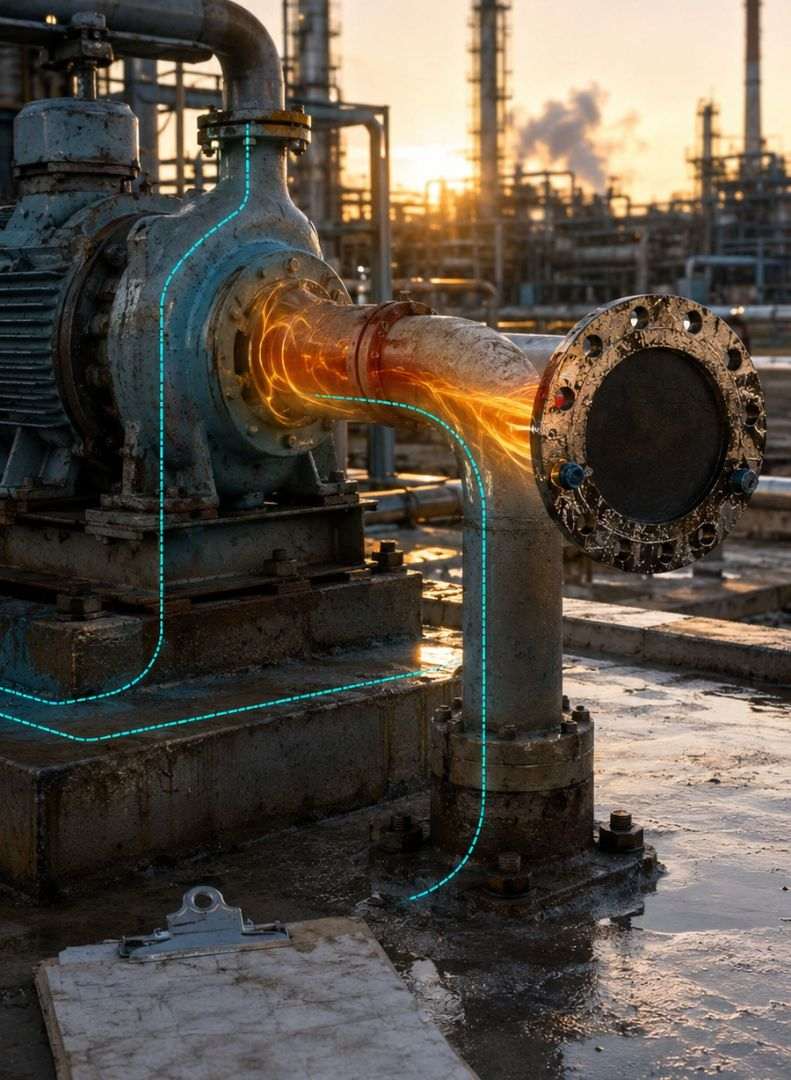
Nothing to pump, still spinning
Five of 120. Every card: a real incident behind it, three difficulty levels inside it.
A model that has read every incident report can tell you what a blocked-in vessel does when heat is admitted. But telling isn’t training. In the Situation Room the vessel is actually blocked in, the heat is actually rising, and the pressure is a live variable that will do what pressure does whether or not you notice in time.
And training today skips exactly the moments that kill: start-ups, shutdowns, the return to service after maintenance. You can’t drill a transient on a live plant, so the first time most operators meet one for real, it’s real.
occur during start-ups, shut-downs and other infrequent operations the transients almost nobody gets to practise.
⚠ Industry-cited figure (2010 refining-industry study, surfaced via the CSB Safety Digest on start-up/shutdown) flagged, not our own claim.
A situation is a title one story, one poster, one card shelved in the Mission Library the way a flight simulator organises its missions. Difficulty lives inside each title, not as a separate one.
15 titles
15 titles
15 titles
15 titles
15 titles
15 titles
15 titles
15 titles
105 genre scenarios + 15 flagships = 120 titles · researched, cited, and flagged
The standby condensate pump’s PSV was removed for maintenance; the restart released condensate through the incomplete boundary. 167 dead.
Start-up overfill drove relief into an atmospheric blowdown drum that overflowed. 15 killed, ~180 injured.
A petrol-tank overfill fed a ~360 m vapour cloud that ignited one of the largest peacetime explosions in Europe.
Workers opened drain valves on a blocked-in vent header, releasing methyl mercaptan inside a building. 4 workers died.
Every title is a self-describing card: the story in plain language, the evidence with its sources, and the physics dials that turn one story into three levels.
“Someone shut the valves between the vessel and its safety valve. Then the heat came on.”
What happens, in plain language. Why it matters the human stakes. How the physics gets you trapped liquid, admitted heat, no relief path.
How frequently this pattern shows up in the incident record, and what it costs when it does from a shift-stopping trip to a vessel rupture.
Williams Geismar, 2013: a reboiler valved off from its PSV was heated and ruptured 2 killed, 167 injured.
Source: CSB investigation · every fact carries a confidence flag: verified / secondary / unverified
The full narrative arc, the named-incident history with dates, and every source link one tap away.
No new content between levels the same physics, with the dials turned: guidance, cascades, lying sensors, time pressure.
EON Universal already understands your facility its components and how they connect. The matcher scans that model against every card’s trigger pattern and tells you which stories your rig can actually play.
of 120 scenarios fit this rig.
✓ fits vessel + PSV + block valve found on the pipe-graph
✓ fits compressor loop with suction/discharge volumes
✗ doesn’t fit needs a cryogenic storage tank
✗ doesn’t fit no steam turbine on this rig
Non-fitting titles never silently disappear they grey out, with the reason spelled out.
Every fact in the library is flagged verified, secondary, or unverified and keeps its source link. Where the physics goes beyond the live engine’s tier, the card says that too. No dressed-up guesses.
“Physics doesn’t hallucinate.”